The largest rental market in California, and the one with the most paperwork attached to working in occupied units. Here is what changes when the building is in LA.
Often yes. If the building falls under the Rent Stabilization Ordinance, window work can require a Tenant Habitability Plan before it starts — and the same program is the gate to recovering part of the cost.
| Local rent regulation | Rent Stabilization Ordinance (RSO) |
|---|---|
| Typical RSO threshold | 2+ units built before October 1978 |
| Pre-work filing | Tenant Habitability Plan may be required |
| Cost recovery route | Primary Renovation Cost Recovery |
| Most common window | Single-pane aluminum slider |
| Price per window | $441 installed, any size |
| Price per patio door | $1,441 installed |
Los Angeles has one of the largest rent-stabilized housing stocks in the country. If your property falls under the Rent Stabilization Ordinance — generally buildings with two or more units built before October 1978 — replacing windows in occupied units is not simply a scheduling exercise. It sits inside the city's Tenant Habitability Program.
The Los Angeles Housing Department requires a Tenant Habitability Plan for primary renovation work that affects the habitability of a tenant's unit or their services. It is also mandatory for soft-story and seismic retrofit work. The plan sets out how tenants stay safely in place during the work, or how they are temporarily relocated if they cannot.
The flip side is cost recovery. Windows are eligible under the RSO capital improvement definition, and owners pursuing the Primary Renovation Cost Recovery program must complete the Tenant Habitability Program requirements first. The habitability plan is not only a hurdle — it is the gate to recovering part of the spend.
Source: Tenant Habitability Program — LAHD. General information only, not legal advice — confirm your building’s position with the relevant authority and your own counsel.
Not on energy savings alone — we will not pretend otherwise. The case that holds up is liability and maintenance timing: egress, forced sashes, water intrusion and turn time.
Ask experienced landlords what they think of window replacement and you get a consistent answer: it is oversold. One of the most-upvoted opinions on the subject is that there is no worse investment than replacing functional windows. Another common view is that the utility savings never match what window companies claim, and that in an old building heat is escaping everywhere anyway. In apartments the point lands even harder, because the tenant usually pays the utilities — so the saving, whatever it is, is not yours.
We think that skepticism is broadly right, and we are not going to argue with it. If every window in your building opens, closes, locks and keeps the weather out, replacing them purely to chase an energy number is a weak case.
Here is the case we do make. Windows in multifamily are a liability and maintenance-timing decision, not a yield decision:
In Los Angeles the liability argument compounds faster than anywhere else, simply because of scale. An owner here is rarely dealing with one stuck sash; they are dealing with the same failed slider repeated across sixty units, which means sixty bedrooms where the egress question has the same answer. That is also why LA owners tend to discover the problem through a habitability complaint rather than an inspection.
If none of those apply to your building, we would rather you kept your money.
Scheduled access unit by unit, agreed in advance. Crews work the unit they are in and nothing else, each apartment is open for hours rather than days, and it is left broom clean.
Ask a multifamily owner what worries them about sending crews into occupied apartments and they rarely mention the product. They talk about what happens when a resident comes home. Theft accusations. A bathroom used without asking. Dust left behind. A tenant who was home all day and now has a complaint about the crew rather than the window.
Those concerns are legitimate and they are the reason a window project in an occupied building goes wrong. So we work to them directly: scheduled unit-by-unit access agreed in advance, crews who work the unit and nothing else, the unit left broom clean, and each apartment open for hours rather than days. In buildings before 1978 we also plan for lead-safe work practices, because pulling old sashes is exactly the moment old paint gets disturbed.
Los Angeles adds a wrinkle: in an RSO building your tenants generally know their rights, and the habitability program exists precisely because the city expects disruption to be documented and mitigated. Vague scheduling is not just inconvenient here, it is a compliance problem. We give you dates per unit, in writing, that you can hand straight to a tenant notice.
A cost-recovery filing turns on documented, per-unit cost. Twenty-four windows at $441 is $10,584 — arithmetic anyone can follow and allocate across units. A lump-sum bid for "the window package" is far harder to break down when someone asks which unit received what.
One rate per opening, whatever its size. No change orders for a wide slider, no allocation argument later.
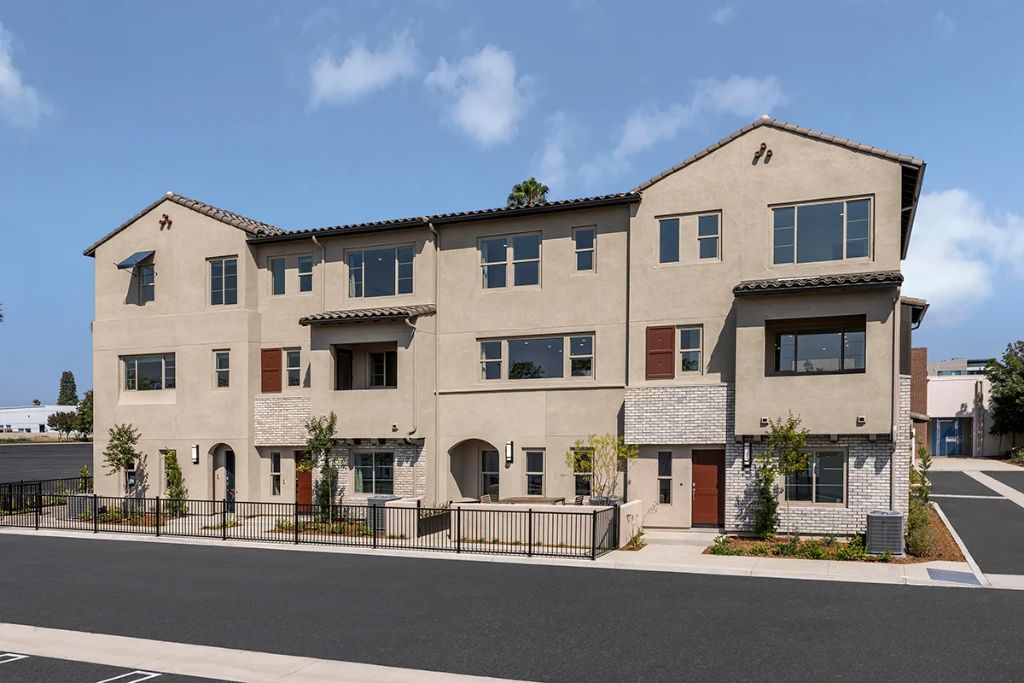
Overwhelmingly single-pane aluminum sliders, set into 1950s and 1960s stucco walk-ups with tuck-under parking.
The 1950s and 1960s stucco walk-up — tuck-under parking, two or three stories, exterior stair access, and single-pane aluminum sliders in every unit. Those sliders are the single most common window we replace in Los Angeles. They rattle, the rollers seize, the latches fail, and the frames conduct heat straight into the unit. Retrofit installation goes into the existing opening, so the stucco stays intact — which matters on a building where cutting stucco means scaffolding, patching and color-matching across an entire elevation.
| Building | Approx. windows | Install time |
|---|---|---|
| 8-unit stucco walk-up | ~32 windows | 1 day |
| 24-unit courtyard building | ~96 windows | 2–3 days |
| 60-unit complex | ~240 windows | 1–2 weeks |
A large share of LA multifamily sits within earshot of the 101, the 405 or the 10, or under the LAX approach corridors. For those buildings the loudest tenant complaint is not temperature — it is noise. Sealed double-pane units in a properly weather-sealed opening cut far more sound than a worn single-pane slider with a gapped frame. If noise is what drives your turnover, say so when you send the building over; it changes what we recommend.
Not listed? We most likely still cover it. Send the building and we’ll confirm.
Send your window count and we’ll come back within 24 hours with a fixed per-building total. No site visit required.