MFWRMultifamily Windows
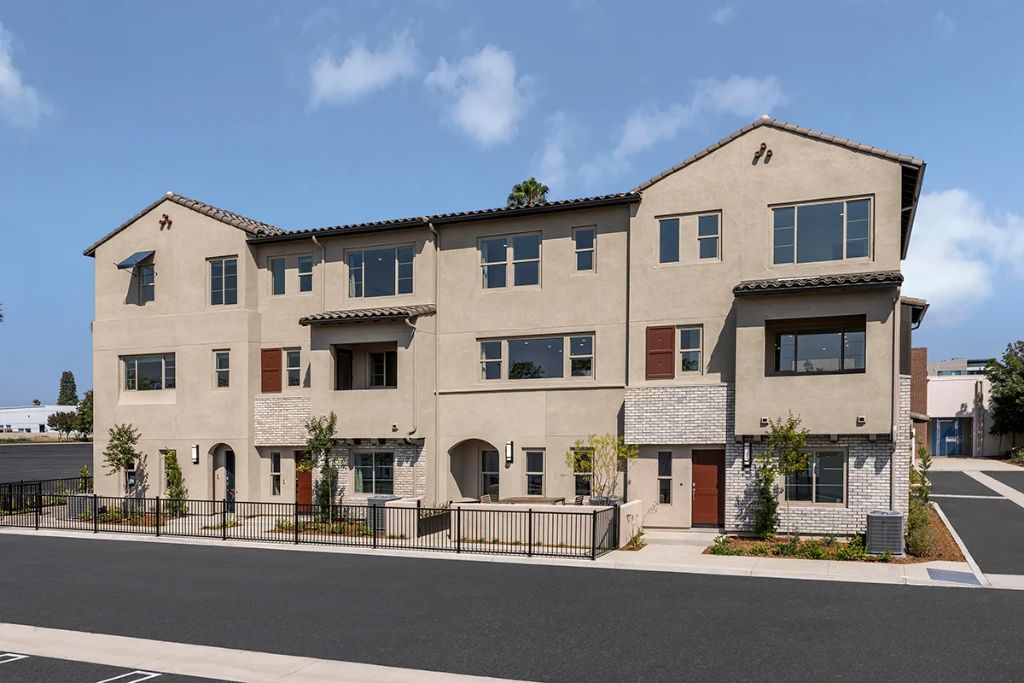
San Diego apartment building

Apartment Window Replacement in San Diego

The simplest regulatory picture of any major California rental market — and the one where salt air, not code, decides what you should install.

$441Per WindowInstalled · any size
$1,441Per Patio DoorInstalled · glass slider
What changes here

Does San Diego have rent control that affects window replacement?

No. San Diego has no city-level rent stabilization ordinance, so there is no habitability plan to file first — and equally no local cost-recovery route afterwards.

Window replacement in San Diego: at a glance
Local rent regulationNone — state law only
Governing lawCalifornia Tenant Protection Act
Pre-work filingNone required by the city
Cost recovery routeNo local passthrough process
Dominant building type1970s–80s stucco garden apartments
Key local factorCoastal salt corrosion
Price per window$441 installed, any size
Price per patio door$1,441 installed

San Diego has no city-level rent stabilization ordinance. Despite repeated attempts to pass one, renters here are covered by California's statewide Tenant Protection Act rather than a local program, which caps annual increases at five per cent plus the local CPI figure.

For an owner planning window work, that means the process is genuinely simpler than in Los Angeles or San Francisco. There is no habitability plan to file with a city housing department before you start, and no capital improvement petition process to navigate afterwards.

It also means there is no local cost-recovery mechanism. In LA and San Francisco, part of a window spend may be recoverable through a city process. In San Diego it is not, so the investment case has to stand on its own: lower turnover, faster unit turns, fewer habitability complaints, and where the market supports it, rent positioning at re-let. We would rather you hear that plainly than discover it later.

Source: California Tenant Protection Act — CA Dept of Justice. General information only, not legal advice — confirm your building’s position with the relevant authority and your own counsel.

The honest case

Is replacing apartment windows actually worth it?

Not on energy savings alone — we will not pretend otherwise. The case that holds up is liability and maintenance timing: egress, forced sashes, water intrusion and turn time.

Ask experienced landlords what they think of window replacement and you get a consistent answer: it is oversold. One of the most-upvoted opinions on the subject is that there is no worse investment than replacing functional windows. Another common view is that the utility savings never match what window companies claim, and that in an old building heat is escaping everywhere anyway. In apartments the point lands even harder, because the tenant usually pays the utilities — so the saving, whatever it is, is not yours.

We think that skepticism is broadly right, and we are not going to argue with it. If every window in your building opens, closes, locks and keeps the weather out, replacing them purely to chase an energy number is a weak case.

Here is the case we do make. Windows in multifamily are a liability and maintenance-timing decision, not a yield decision:

San Diego is where this argument has to be made most honestly, because there is no cost-recovery route to fall back on. Nothing here is recoverable through a city process. So if the windows in your building open, close, lock and seal, we would genuinely rather you spent the money on something your tenants can see — and if they do not, the liability case stands entirely on its own merits.

If none of those apply to your building, we would rather you kept your money.
Occupied units

How do you work in occupied apartments?

Scheduled access unit by unit, agreed in advance. Crews work the unit they are in and nothing else, each apartment is open for hours rather than days, and it is left broom clean.

Ask a multifamily owner what worries them about sending crews into occupied apartments and they rarely mention the product. They talk about what happens when a resident comes home. Theft accusations. A bathroom used without asking. Dust left behind. A tenant who was home all day and now has a complaint about the crew rather than the window.

Those concerns are legitimate and they are the reason a window project in an occupied building goes wrong. So we work to them directly: scheduled unit-by-unit access agreed in advance, crews who work the unit and nothing else, the unit left broom clean, and each apartment open for hours rather than days. In buildings before 1978 we also plan for lead-safe work practices, because pulling old sashes is exactly the moment old paint gets disturbed.

The San Diego pattern is different from the rest of the state: turnover is high enough that a meaningful share of a building can usually be done vacant. Where we can sequence around your turns, we will — a unit done between tenancies has no occupied-unit risk at all, and no notice to serve.

Without a passthrough route, the number itself has to make sense. A flat $441 per window lets you model a building in a single line of arithmetic before you commit to anything, and compare it directly against what you would otherwise spend on repeated service calls to windows that keep failing.

24 windows24 × $441
6 patio doors6 × $1,441
Documented total$19,230

One rate per opening, whatever its size. No change orders for a wide slider, no allocation argument later.

Building stock

Does coastal air affect which windows you should install?

Yes, materially. Within a few miles of the coast, aluminum frames and hardware corrode noticeably faster, so frame material and hardware finish matter more here than inland.

Much of San Diego's rental stock is 1970s and 1980s two- and three-story stucco garden apartments built around surface parking or a courtyard. Within a few miles of the coast, the aluminum frames and hardware in those buildings corrode measurably faster than the same units inland — pitted frames, seized rollers, latches that no longer catch. It is the reason a building in Ocean Beach and an identical building in El Cajon do not age the same way. Frame material and hardware finish are worth more attention here than almost anywhere else in the state, and we will tell you which way to go for your exposure.

Typical project timelines in this market
BuildingApprox. windowsInstall time
Vacant unit turn4–8 windowsSame day
16-unit garden complex~64 windows2 days
48-unit property~190 windows1 week

Turnover speed is the real economics

San Diego's rental market carries a large, mobile population — military households near the bases, students, and a steady in-and-out that keeps turnover high. In a high-turnover market the cost of a window is not really the window; it is the days a unit sits off-market waiting for one. Retrofit installation puts a unit back in service the same day rather than holding it open for a framing and stucco repair, which is usually the number that actually matters in your model.

Coverage

Which areas do you cover in San Diego County?

  • North Park
  • City Heights
  • Normal Heights
  • Hillcrest
  • Clairemont
  • Pacific Beach
  • Ocean Beach
  • Point Loma
  • Mission Valley
  • Chula Vista
  • National City
  • El Cajon
  • La Mesa
  • Santee
  • Spring Valley
  • Lemon Grove
  • Oceanside
  • Vista
  • Escondido
  • San Marcos

Not listed? We most likely still cover it. Send the building and we’ll confirm.

San Diego questions

Common questions about San Diego window replacement

Does San Diego have rent control I need to worry about?
There is no city-level rent stabilization ordinance in San Diego. Rentals here fall under California's statewide Tenant Protection Act instead, which caps annual increases at five per cent plus local CPI. That makes window work administratively simpler here than in Los Angeles or San Francisco — but confirm your specific property's status, since state law has its own exemptions.
Can I raise rent to cover new windows?
There is no local capital improvement passthrough process in San Diego the way there is in San Francisco. Any increase would fall under the ordinary statewide cap rather than a cost-recovery filing. Talk to your own advisor about how that fits your plans — we price the work, not the rent strategy.
We're two blocks from the beach. Does that change what you install?
It changes what we recommend. Coastal exposure is hard on aluminum frames and on hardware finishes, and the difference shows up within a few years rather than a few decades. Tell us the address and we will factor the exposure into the product we specify.
How fast can you turn a vacant unit?
Retrofit installation into the existing opening is normally a same-day operation per unit, so a vacant unit does not sit waiting on stucco patching and paint. On an occupied building we stage unit by unit for the same reason.
Could new windows trigger an egress requirement?
It is the surprise that catches owners out most often. If an existing opening does not meet current egress requirements, a building department can require the opening be resized, which means reframing - and reframing is structural work that falls outside our flat rate. We flag this before you commit rather than after, so it never arrives as a change order.
Our building is pre-1978. What about lead paint?
Assume it is a factor and plan for it. Pulling old sashes is exactly the moment old paint gets disturbed, which is why lead-safe work practices matter on pre-1978 buildings - and in California that covers a very large share of rent-stabilized stock. Tell us the year built when you send the building over.
Can we do part of the building now and the rest later?
Yes, and there is no price penalty for it. Owners often struggle to get a contractor interested in a handful of windows at a time. Because we price per window rather than per contract, fifteen windows now and fifteen next year costs the same per window as thirty at once.
How do you handle crews working in occupied apartments?
Access is scheduled unit by unit and agreed in advance, crews work the unit they are in and nothing else, and the unit is left broom clean. Each apartment is open for hours rather than days, and none is left open overnight. If you want a member of your own management or maintenance staff present during the work, that is welcome - a lot of owners prefer it and we plan around it.

Get a number for your building

Send your window count and we’ll come back within 24 hours with a fixed per-building total. No site visit required.

Request Your Quote

Give us a call

(800) 510-5311

Mon–Fri, 8am–6pm PT

Email us

Replies within one business day