The one California market where the Rent Board names new windows, in writing, as a qualifying capital improvement. That single fact changes the investment case.
Potentially. The Rent Board lists new windows as a qualifying capital improvement, so an owner may file a Capital Improvement Petition after the work is complete — though tenants can contest it at a hearing.
| Local rent regulation | San Francisco Rent Ordinance |
|---|---|
| New windows classified as | Capital improvement, not repair |
| Cost recovery route | Capital Improvement Petition |
| Filing deadline | Within 5 years of completion |
| Filed when | Only after work is entirely complete |
| Tenant notice before hearing | At least 10 days |
| Price per window | $441 installed, any size |
| Price per patio door | $1,441 installed |
San Francisco draws a hard line between repair and capital improvement. Patching a roof or replacing a single broken pane is repair and maintenance. Replacing the windows is a capital improvement — the Rent Board lists new windows explicitly among its examples, alongside a new roof and exterior painting.
That distinction matters because capital improvements can be passed through. An owner may file a Capital Improvement Petition to recover a portion of the cost from tenants through a rent increase. The petition must be filed before serving any rent increase notice for the passthrough, cannot be filed until the work is entirely complete, and must be filed within five years of completion. Forms differ for properties with one to five units and those with six or more.
It is an adversarial process, not a formality. The Rent Board sets a hearing, notifies affected tenants at least ten days beforehand, and tenants may file a written response and argue against the petition at that hearing. Your documentation is what you bring to it.
Source: Capital Improvement Petitions — SF Rent Board. General information only, not legal advice — confirm your building’s position with the relevant authority and your own counsel.
Not on energy savings alone — we will not pretend otherwise. The case that holds up is liability and maintenance timing: egress, forced sashes, water intrusion and turn time.
Ask experienced landlords what they think of window replacement and you get a consistent answer: it is oversold. One of the most-upvoted opinions on the subject is that there is no worse investment than replacing functional windows. Another common view is that the utility savings never match what window companies claim, and that in an old building heat is escaping everywhere anyway. In apartments the point lands even harder, because the tenant usually pays the utilities — so the saving, whatever it is, is not yours.
We think that skepticism is broadly right, and we are not going to argue with it. If every window in your building opens, closes, locks and keeps the weather out, replacing them purely to chase an energy number is a weak case.
Here is the case we do make. Windows in multifamily are a liability and maintenance-timing decision, not a yield decision:
San Francisco is the one market where we will concede the financial argument is genuinely different. Because the Rent Board treats new windows as a capital improvement rather than repair, part of the spend may be recoverable through a petition — which is not true in San Diego or Sacramento. That does not make windows an investment, but it does change the arithmetic in a way worth taking seriously before you decide.
If none of those apply to your building, we would rather you kept your money.
Scheduled access unit by unit, agreed in advance. Crews work the unit they are in and nothing else, each apartment is open for hours rather than days, and it is left broom clean.
Ask a multifamily owner what worries them about sending crews into occupied apartments and they rarely mention the product. They talk about what happens when a resident comes home. Theft accusations. A bathroom used without asking. Dust left behind. A tenant who was home all day and now has a complaint about the crew rather than the window.
Those concerns are legitimate and they are the reason a window project in an occupied building goes wrong. So we work to them directly: scheduled unit-by-unit access agreed in advance, crews who work the unit and nothing else, the unit left broom clean, and each apartment open for hours rather than days. In buildings before 1978 we also plan for lead-safe work practices, because pulling old sashes is exactly the moment old paint gets disturbed.
San Francisco buildings are often small, and small buildings mean long-tenured neighbours who talk to each other. A crew that handles one unit badly is known to the whole building by evening — and if you later file a capital improvement petition, those same tenants are the ones entitled to appear at the hearing. Conduct in the units is not a soft issue here; it is part of your paperwork.
A petition is decided on documented cost, in front of tenants who are entitled to contest it. A flat per-window rate gives you a figure that maps one-to-one onto units and openings: this unit had four windows, four times $441. That is a materially easier number to defend at a hearing than a single contractor total for a whole building.
One rate per opening, whatever its size. No change orders for a wide slider, no allocation argument later.
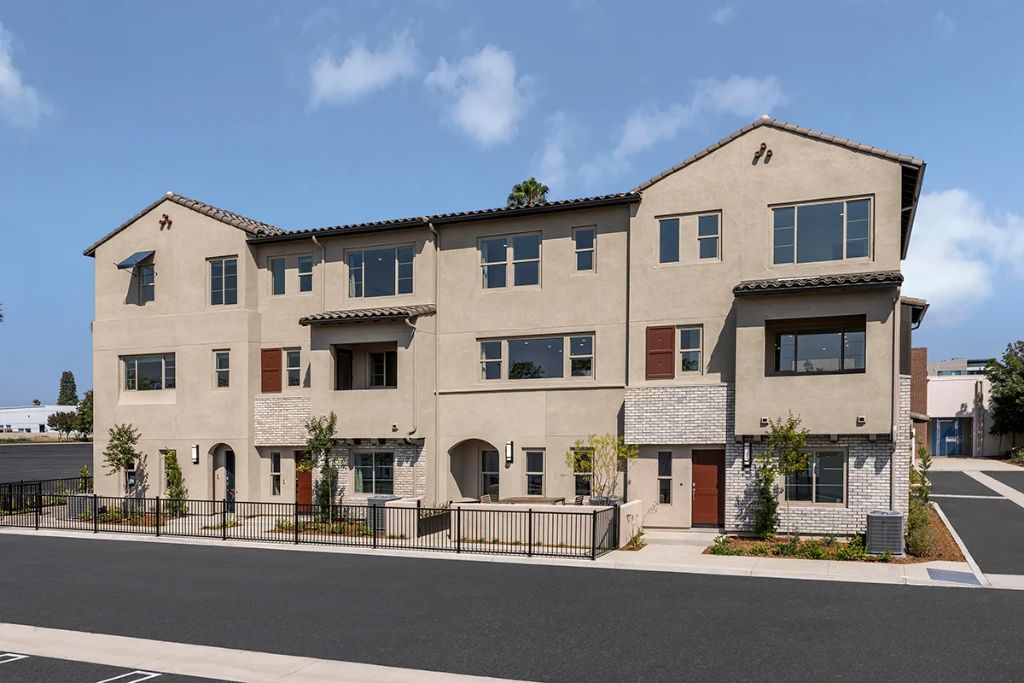
The same rate as any other window, per sash. A bay containing four sashes is four windows at $441 each, with no surcharge for the angled jambs.
San Francisco's signature window is also its most misquoted. A bay is not one opening — it is typically three to five sashes set into angled jambs, often across two stories, on a wood-frame building that has moved over a century. Contractors who price per opening tend to either underquote a bay and add charges later, or refuse it. Our rate is per window, so a bay is counted as the windows it actually contains and priced the same as any other. Nothing about the number changes because the geometry is difficult.
| Building | Approx. windows | Install time |
|---|---|---|
| 2-unit Edwardian | ~12 windows | 1 day |
| 6-unit building with bays | ~34 sashes | 1–2 days |
| 20-unit apartment block | ~80 windows | 3–5 days |
The marine climate flips the usual priorities. Most San Francisco apartment buildings have no air conditioning at all, so solar control matters far less here than air sealing and moisture control. The failures we are called for are draughts off a worn sash, condensation on single glazing, and wind-driven rain finding a gap in a frame that has not sealed properly in twenty years. Weather-sealing the opening is the part of the job that decides whether the complaint stops.
Not listed? We most likely still cover it. Send the building and we’ll confirm.
Send your window count and we’ll come back within 24 hours with a fixed per-building total. No site visit required.