Oakland, San Jose, Fremont, Hayward, Concord and the cities around them. San Francisco has its own page — the rules there are different enough to warrant one.
Do Bay Area cities have different rules for window replacement?
Yes, and the variation is the largest in the state. Oakland, Berkeley and San Jose each run their own rent programs, while several neighbouring cities rely on state law alone.
Window replacement in Bay Area: at a glance
Scope of this page
East Bay, South Bay and Peninsula
San Francisco
Covered on its own page
Regulatory picture
Varies city by city
Cities with own programs
Oakland, Berkeley, San Jose
Pre-work filing
Depends on jurisdiction
Price per window
$441 installed, any size — identical in every city
Price per patio door
$1,441 installed
There is no single Bay Area rulebook. Oakland, Berkeley and San Jose each run their own rent programmes, with their own registration, noticing and capital improvement provisions. Fremont, Hayward, Sunnyvale, Santa Clara and Concord vary — some operate local measures, others fall back on California's statewide Tenant Protection Act.
For an owner with a single building, that is one set of rules to learn. For an owner with a portfolio spread across three cities — which is common here — it means three different processes for the same scope of work, with different forms, different timing and different cost-recovery treatment.
We are not your compliance advisor, and we will not pretend the picture is simpler than it is. What we will do is give you a per-window cost that stays identical across every one of those jurisdictions, so the one variable you do not have to model is the price.
Not on energy savings alone — we will not pretend otherwise. The case that holds up is liability and maintenance timing: egress, forced sashes, water intrusion and turn time.
Ask experienced landlords what they think of window replacement and you get a consistent answer: it is oversold. One of the most-upvoted opinions on the subject is that there is no worse investment than replacing functional windows. Another common view is that the utility savings never match what window companies claim, and that in an old building heat is escaping everywhere anyway. In apartments the point lands even harder, because the tenant usually pays the utilities — so the saving, whatever it is, is not yours.
We think that skepticism is broadly right, and we are not going to argue with it. If every window in your building opens, closes, locks and keeps the weather out, replacing them purely to chase an energy number is a weak case.
Here is the case we do make. Windows in multifamily are a liability and maintenance-timing decision, not a yield decision:
Egress. A bedroom window that will not open is an escape route that does not work. Across forty units that is not an inconvenience, it is a compounding liability with your name on it.
Forced windows break. A tenant who has to fight a stuck sash will keep forcing it until something gives — and it fails on its schedule, not yours, often in the rain, often with water damage attached.
Water is the expensive failure. Repeat leaks around a tired frame do not stay at the frame. They reach sheetrock, framing and, eventually, pest problems that cost multiples of the window.
Turn time. A unit waiting on a window is a unit off market. Retrofit work goes back in service the same day.
Across a Bay Area portfolio the liability case is usually the only one that survives contact with three different city rulebooks. Cost recovery varies by jurisdiction and may not exist at all in some of the cities you own in, so if you are building a single capital plan across the region, egress and water intrusion are the criteria that apply consistently everywhere.
If none of those apply to your building, we would rather you kept your money.
Occupied units
How do you work in occupied apartments?
Scheduled access unit by unit, agreed in advance. Crews work the unit they are in and nothing else, each apartment is open for hours rather than days, and it is left broom clean.
Ask a multifamily owner what worries them about sending crews into occupied apartments and they rarely mention the product. They talk about what happens when a resident comes home. Theft accusations. A bathroom used without asking. Dust left behind. A tenant who was home all day and now has a complaint about the crew rather than the window.
Those concerns are legitimate and they are the reason a window project in an occupied building goes wrong. So we work to them directly: scheduled unit-by-unit access agreed in advance, crews who work the unit and nothing else, the unit left broom clean, and each apartment open for hours rather than days. In buildings before 1978 we also plan for lead-safe work practices, because pulling old sashes is exactly the moment old paint gets disturbed.
The practical difficulty here is that the same crew may work three cities in a month, each with different tenant-notice expectations. We default to the stricter standard rather than the local minimum — scheduled access per unit, written dates, nothing improvised — because it is the only approach that travels across every jurisdiction we work in.
Where the paperwork changes at every city line, a price that does not is worth something. The same building scope costs the same in Oakland as in Fremont as in San Jose, so you can compare properties on their merits rather than on which contractor happened to bid which city.
24 windows24 × $441
6 patio doors6 × $1,441
Documented total$19,230
One rate per opening, whatever its size. No change orders for a wide slider, no allocation argument later.
Building stock
What kind of apartment buildings are in the East Bay and South Bay?
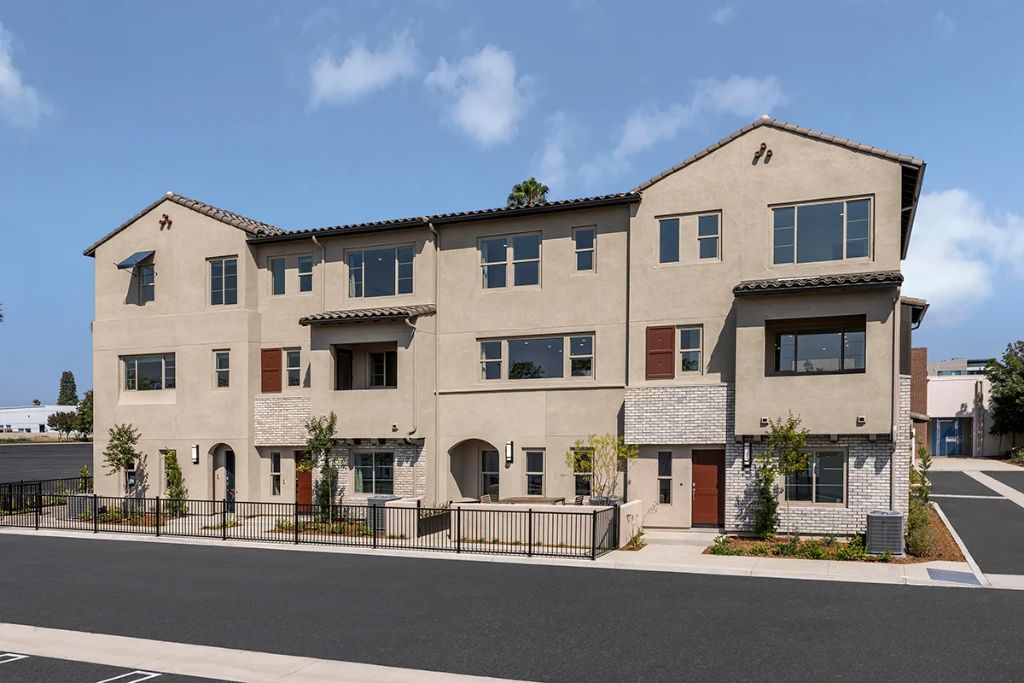
Three distinct eras in one market — 1920s–30s Oakland stucco fourplexes, 1960s–70s South Bay garden apartments, and two decades of podium construction along the transit corridors.
The Bay Area's rental stock does not resolve into a single type the way Sacramento's largely does. Oakland and Berkeley carry a lot of 1920s and 1930s stucco fourplexes and small courtyard buildings. The South Bay is dominated by 1960s and 1970s garden apartments built through the first valley boom. Layered on top is two decades of podium construction along the transit corridors. A portfolio here can easily span all three, and each wants a different retrofit approach — which is why we ask what you own before we recommend anything.
Typical project timelines in this market
Building
Approx. windows
Install time
4-unit Oakland fourplex
~18 windows
1 day
30-unit South Bay garden complex
~120 windows
3–5 days
Portfolio across 3 cities
Varies
Sequenced per jurisdiction
Microclimates within a few miles
Few regions vary this much over this short a distance. A building in Concord deals with genuine inland summer heat; one in Richmond or Alameda, a few miles west, deals with marine damp and wind instead. That difference changes whether the priority is solar control or air sealing and moisture. It is worth telling us where the building actually sits rather than just naming the county.
Coverage
Which areas do you cover in East Bay, South Bay & Peninsula?
Common questions about Bay Area window replacement
Do you cover San Francisco on this page?
No. San Francisco's Rent Ordinance and its capital improvement petition process are different enough from the surrounding cities that we cover it on its own page. If your building is in the city proper, start there.
Our portfolio spans Oakland, Fremont and San Jose. Is the price different in each?
No. $441 per window and $1,441 per patio door applies identically across every city we serve. The tenant-law process differs by jurisdiction, but our number does not.
Which Bay Area cities have their own rent programmes?
Oakland, Berkeley and San Jose each run their own, and several other cities operate local measures while others rely on state law. Because these programmes change and the details matter, check the current position with the city your building sits in rather than relying on a contractor's summary — including ours.
Do you work on podium and mid-rise buildings, or only walk-ups?
Both, where the work is a retrofit into existing openings. Buildings needing structural modification or full-frame replacement fall outside the flat rate and we quote them separately.
Could new windows trigger an egress requirement?
It is the surprise that catches owners out most often. If an existing opening does not meet current egress requirements, a building department can require the opening be resized, which means reframing - and reframing is structural work that falls outside our flat rate. We flag this before you commit rather than after, so it never arrives as a change order.
Our building is pre-1978. What about lead paint?
Assume it is a factor and plan for it. Pulling old sashes is exactly the moment old paint gets disturbed, which is why lead-safe work practices matter on pre-1978 buildings - and in California that covers a very large share of rent-stabilized stock. Tell us the year built when you send the building over.
Can we do part of the building now and the rest later?
Yes, and there is no price penalty for it. Owners often struggle to get a contractor interested in a handful of windows at a time. Because we price per window rather than per contract, fifteen windows now and fifteen next year costs the same per window as thirty at once.
How do you handle crews working in occupied apartments?
Access is scheduled unit by unit and agreed in advance, crews work the unit they are in and nothing else, and the unit is left broom clean. Each apartment is open for hours rather than days, and none is left open overnight. If you want a member of your own management or maintenance staff present during the work, that is welcome - a lot of owners prefer it and we plan around it.
Get a number for your building
Send your window count and we’ll come back within 24 hours with a fixed per-building total. No site visit required.